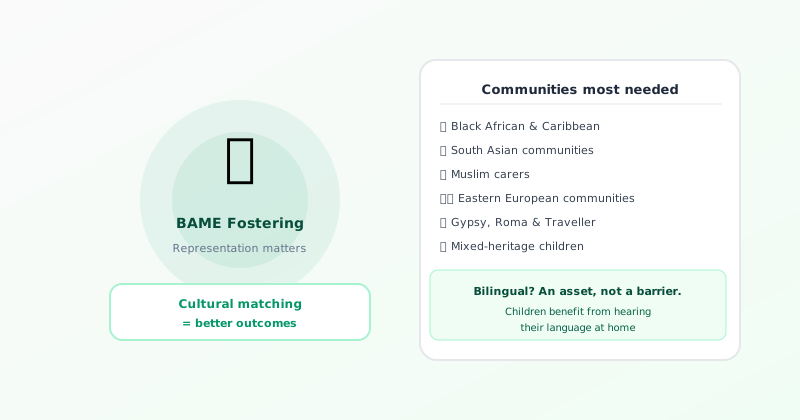
- Black and minority ethnic children are significantly over-represented in care
- Culturally matched placements produce measurably better outcomes
- There is an acute shortage of Black, Asian, and minority ethnic foster carers
- Agencies actively seek - and support - carers from all communities
- Being bilingual or multilingual is an asset in fostering
Children from Black, Asian and minority ethnic (BAME) backgrounds represent a disproportionate share of children in care relative to the wider population. Research consistently shows that children placed with carers who share their cultural, linguistic, or religious background have better outcomes - stronger identity development, lower placement breakdown rates, and higher wellbeing.
The Evidence on Cultural Matching
- Children placed cross-racially report higher rates of identity confusion in later life
- Cultural and religious practices familiar to the child aid placement stability
- Language continuity matters enormously for children from non-English-speaking families
- Carers who share a child's background can model positive identity in ways others cannot
Who Is Needed Most
Based on the populations of children in care, the most acute shortages are for: Black African and Black Caribbean communities, South Asian communities (particularly Pakistani and Bangladeshi backgrounds), Muslim carers, Eastern European communities, Gypsy, Roma and Traveller communities, and mixed-heritage children.
Dispelling the Myths
- Myth: "My extended family would never approve." Your agency will help you navigate this. Many BAME carers have successfully navigated initial family scepticism.
- Myth: "The children won't be from my community." Often they will be. Cultural matching is actively attempted.
- Myth: "The process is designed for white British families." Agencies have worked hard to make the process culturally sensitive, though there is always more to do.
Frequently Asked Questions
Will I only be matched with children from my own ethnic background?
Not exclusively. Agencies will try to match culturally where possible, but you may also be asked to care for children from other backgrounds - this is always your choice.
Can I foster if English is not my first language?
Yes - being bilingual or multilingual is an asset. Children from non-English-speaking families benefit enormously from carers who can communicate in their language.
Does my religion affect whether I can foster?
No, your faith does not bar you from fostering. However, you are expected to support the religious and cultural needs of children placed with you, which may sometimes differ from your own faith.