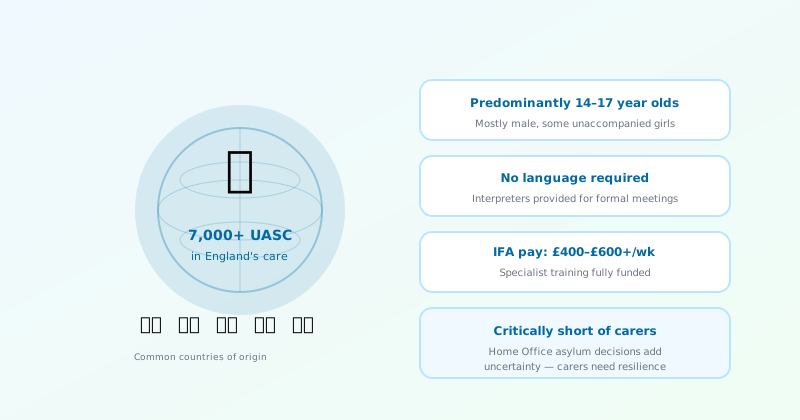
There are over 7,000 UASC in local authority care in England at any time. These are children who have arrived in the UK alone, without parents or guardians, and claimed asylum. They are predominantly male teenagers (14–17). Carers for UASC are in critically short supply.
Who Are UASC?
Unaccompanied asylum seeking children (UASC) — sometimes called unaccompanied minors — are children under 18 who arrive in the UK without a parent or legal guardian and make a claim for asylum. They come from a range of countries, with Afghanistan, Eritrea, Sudan, Vietnam, and Iran among the most common in recent years.
They have often made extraordinarily dangerous journeys — across deserts, in boats, in lorries — sometimes over months or years. By the time they arrive, they are exhausted, often traumatised, frequently without documentation, and facing an immigration system they cannot navigate alone.
What Does Fostering a UASC Involve?
Fostering a UASC is, at its core, the same as fostering any teenager — providing a safe, stable, caring home. But there are important differences to understand:
- Language barriers — many UASC speak little or no English on arrival; interpreters are provided for formal meetings but day-to-day communication requires patience and creativity
- Cultural differences — food, religion, customs, and gender norms may differ significantly from your household; this requires open-mindedness and flexibility
- Trauma history — many UASC have experienced war, persecution, bereavement, or abuse. Sleep difficulties, hypervigilance, and emotional dysregulation are common
- Immigration process — you will support the young person through interviews with the Home Office and potentially through the asylum appeals process. This can be stressful for them and for you
- Age disputes — local authorities sometimes dispute the age a young person claims; carers may have to navigate this sensitively
What Skills and Qualities Do You Need?
- Cultural curiosity and genuine openness to different backgrounds
- Patience with communication barriers
- Ability to help a young person navigate bureaucratic systems
- Comfort with uncertainty (immigration outcomes are unpredictable)
- Knowledge of or willingness to learn about trauma-informed approaches
You do not need to speak another language. You do not need to have experience with asylum seekers. Specialist training is provided by your agency.
Pay for Carers of UASC
UASC placements are classified as short-term fostering. Because local authorities have a statutory duty to care for them and they are often the most urgent placements, rates can be higher than standard:
- Local authority: £200–£350/week (allowance only)
- IFA specialist UASC placement: £400–£600+/week
Note: UASC are entitled to the same allowances as any child in care — this includes clothing, activities, and education costs which are met by the local authority.
What Happens to the Young Person?
Outcomes vary significantly based on the Home Office asylum decision:
- Refugee status granted — the young person can stay in the UK and is supported to transition to independent living (usually at 18)
- Humanitarian protection — similar to refugee status
- Leave to remain until 18 — discretionary leave granted until adulthood, future uncertain
- Refused — appeal process begins; most experienced carers and agencies support the young person through this
The uncertainty is one of the hardest parts — for the young person and for their carer. Many foster carers who care for UASC speak about the profound responsibility — and joy — of helping a young person rebuild their sense of safety and possibility.
Where to Start
Many IFAs specifically recruit for UASC placements. When enquiring, ask: "Do you work with unaccompanied asylum seeking children?" and ask about their specialist training, interpreter support, and immigration legal support networks. Some local authorities also have dedicated UASC teams.